
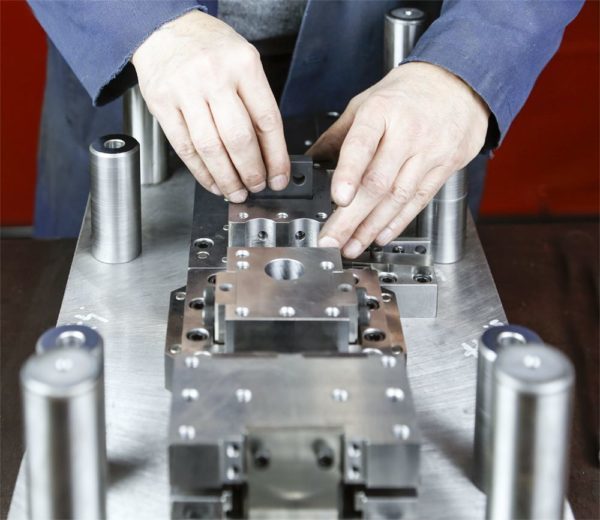
Injection molding and die stamping are two of the most commonly used manufacturing processes in the industrial world. The two processes are often confused, but they each have their own unique benefits and uses. Injection molding is a process in which molten plastic is injected into a mold at high pressure, while die stamping is the process of using a die to shape metal into desired shapes. Both processes have their advantages, and understanding the differences between them can help you make the right choice for your specific manufacturing needs.
Injection molding is a relatively inexpensive manufacturing process, and it offers a wide range of benefits. For instance, it is extremely fast, with parts typically taking only minutes to be produced. The process also allows for a high degree of accuracy, ensuring precise and consistent parts. Additionally, injection molding is capable of producing parts with complex geometry and intricate details, making it ideal for projects requiring precise tolerances. The process also produces parts with a high degree of uniformity, allowing for consistent quality across a batch. Injection molding is also highly versatile, as it can be used with a variety of different materials, including plastics, rubber, and metal alloys.
Die stamping, on the other hand, is a much more expensive process, but it offers a number of advantages. For instance, die stamping is capable of producing parts with extremely tight tolerances, making it ideal for projects requiring precise parts. The process is also extremely fast, with parts typically taking only seconds to be produced. Additionally, die stamping is capable of producing parts with complex shapes and intricate details, making it ideal for projects requiring complex parts. The process is also highly versatile, as it can be used with a variety of different materials, including metals, plastics, and rubber.
When deciding between injection molding and die stamping, it is important to consider the specific needs of your project. Injection molding is often the best choice for projects requiring large quantities of parts quickly, while die stamping is best for projects requiring precision and complex geometries. Additionally, it is important to consider the cost of each process, as injection molding is typically cheaper than die stamping. Ultimately, the choice between injection molding and die stamping should be based on the specific needs of your project, as each process offers unique benefits and uses.